Iginio Rossi, INU – URBIT
The complexity and articulation of the relationships that people make fall in individual and collective levels on places, functions, uses, expectations, to mention the most widespread ones, push the services of the territory to assume roles that are increasingly attentive to the services provided and to integration with the social, cultural, economic, environmental, etc. dimensions in which they operate.
The broad system of integrated and sustainable mobility refers to these contexts, which are subjected to continuous evolution, which aims decisively at the construction of networks capable of welding the needs of users with the offers provided by mobility services.
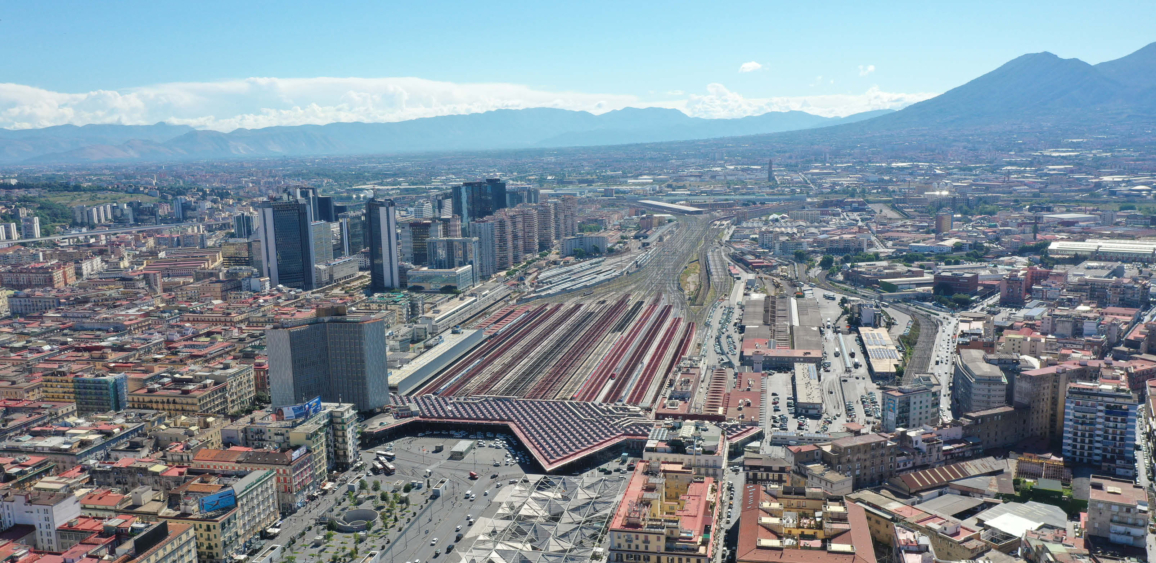
The stations, says Christian Colaneri, Director of Strategies, Sustainability and Infrastructure Development Planning at RFI, in framing the publication “The territorial vocations of Italian railway stations. A data-driven” approach, published by INU Edizioni 2025, are increasingly at the center of great contemporary urban transformations. They become functional, accessible and open spaces, capable of generating public value as well as guaranteeing an ever better quality of the travel experience. Intervening on the station therefore means responding to concrete needs that concern entire cities and complex territorial systems, also in terms of liveability and attractiveness.
The Strategies, Sustainability and Infrastructure Development Planning Directorate therefore promotes an integrated and multidisciplinary approach to infrastructural development, in which knowledge of territories, the digitalisation of information, the adoption of advanced analytical tools and interinstitutional collaboration represent the key elements of the strategies to be implemented. The data-driven approach represents precisely a structural element in decision-making processes that allows the various contexts to be interpreted objectively and in a timely manner, interventions to be optimised and their effectiveness to be measured. Through the MobiLand platform, a true corporate information ecosystem, RFI has built a solid foundation for strategic planning guided by data and in continuous dialogue with the territory.
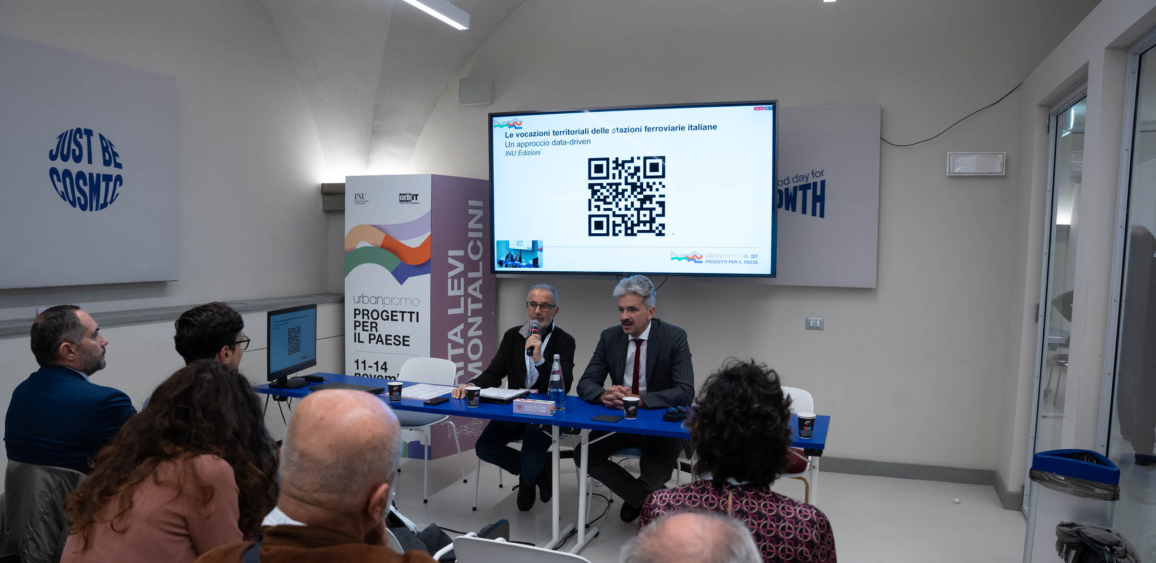
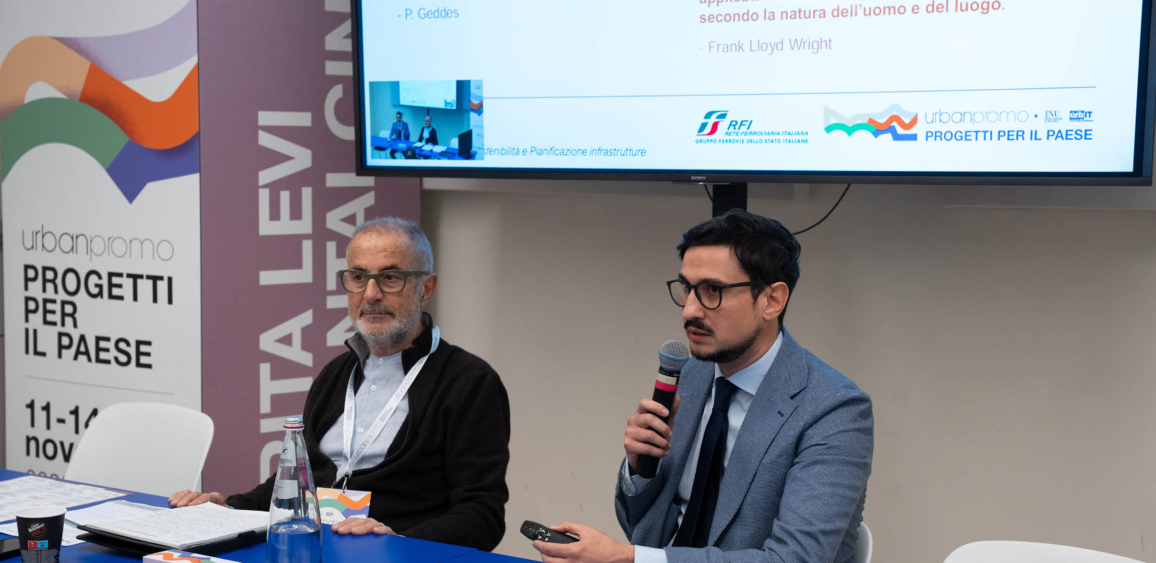
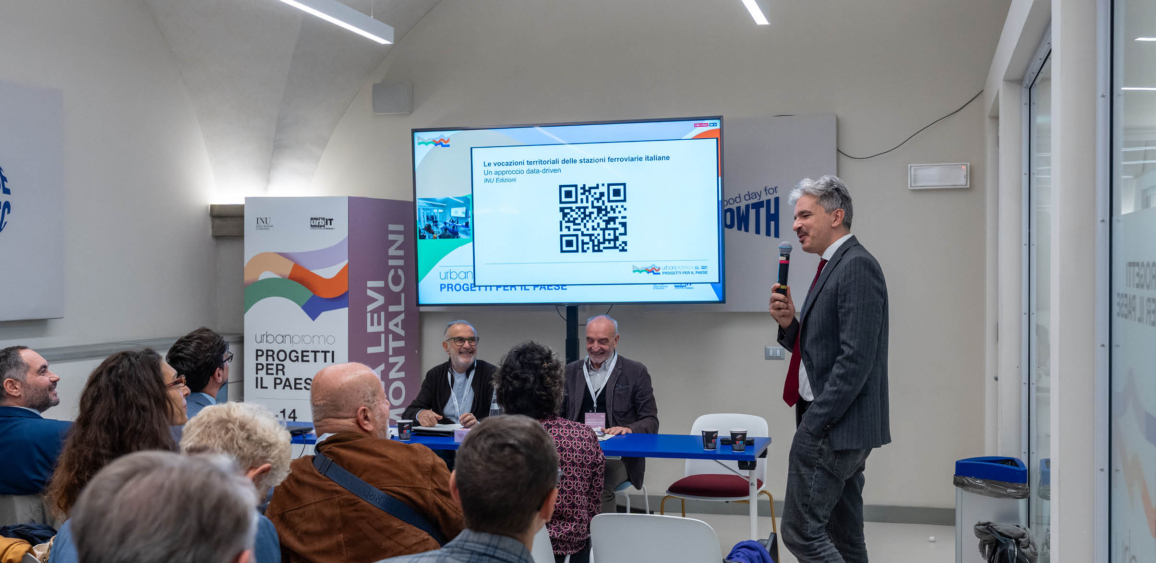
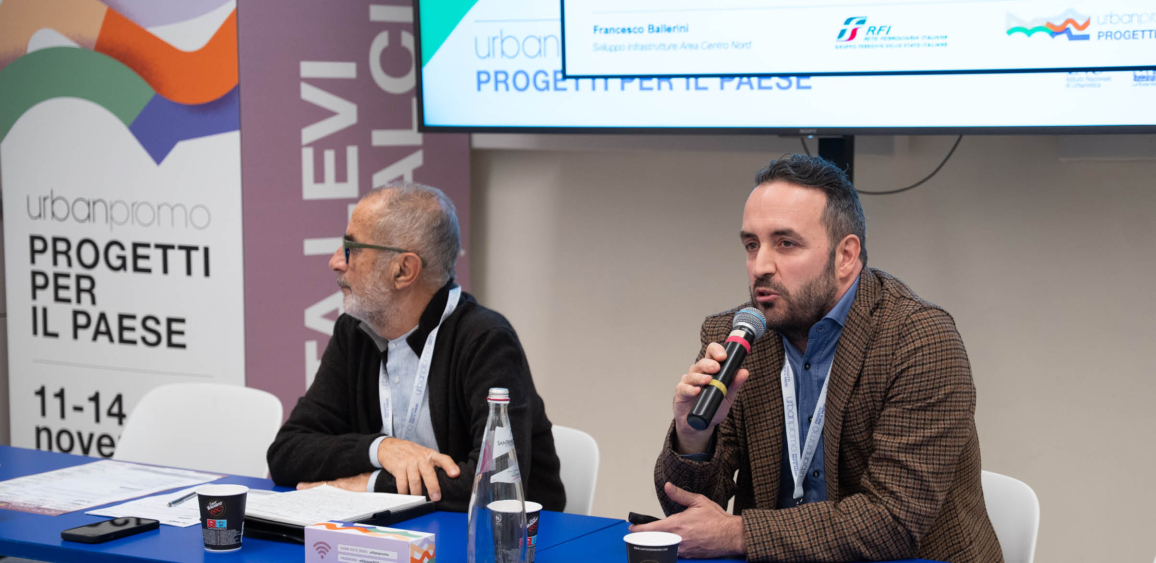
The meeting proposed by Urbanpromo is placed in this framework and aims to clarify, with in-depth studies by experts and derived from experiences in the area, the definition of territorial vocations but also illustrate the operational method that allows us to interpret the current and potential role of the stations Italian railways.
PROGRAM
09:30 Start of work
Introduces and moderates
Iginio Rossi, INU – URBIT
Institutional greetings
Michele Talia, INU
First session
Thematic framework
“The territorial vocations of the stations: a data-driven approach’
Luigi Contestabile, Italian Railway Network
Second session
Methodology and applications of Territorial Vocations
“Territorial vocations as drivers of development of the railway network: new access points to the network and their name”
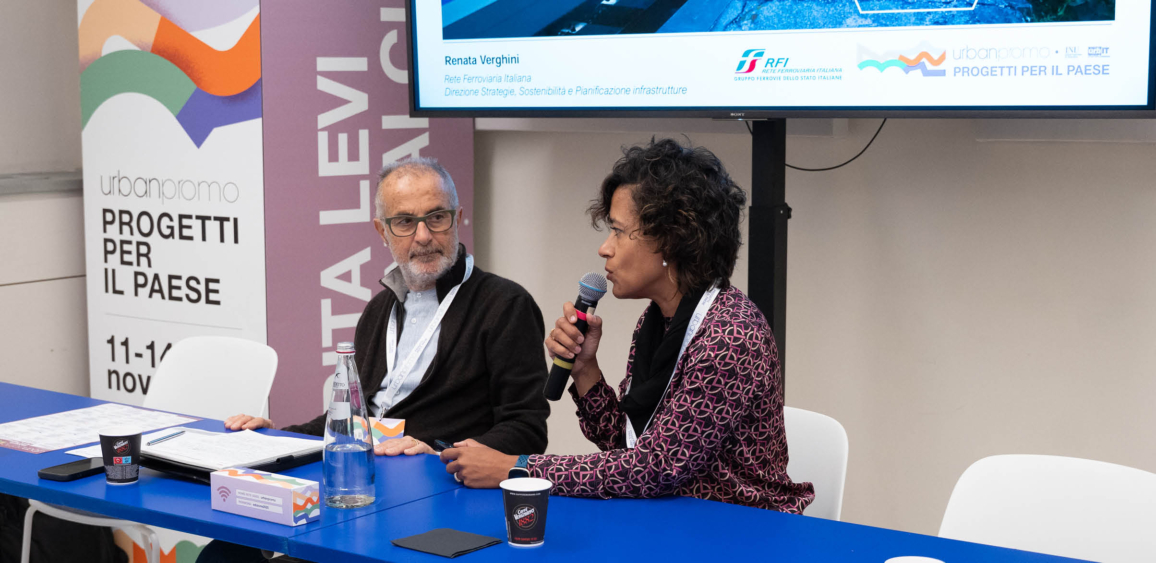
Renata Verghini, Italian Railway Network
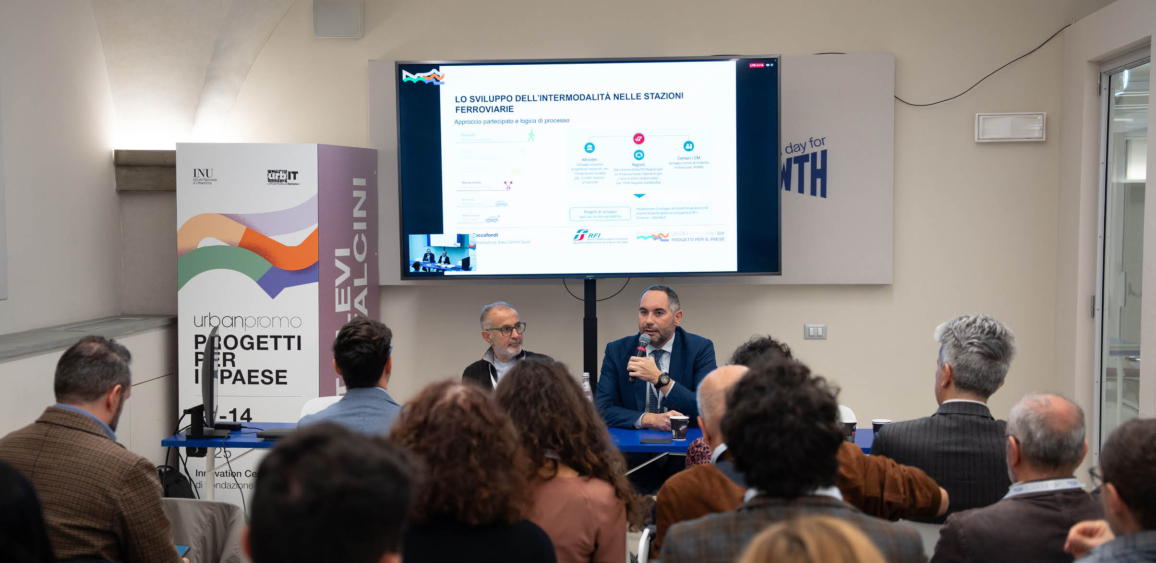
“Vocations and interventions for the development of infrastructures and intermodal services: the cases of the stations of Arezzo, Parma and La Spezia”
Marco Toccafondi, Italian Railway Network
“The identity card of today’s and tomorrow’s stations: vocation, classification, framework and territorial context”
Stefano Fondi, Italian Railway Network
Third session
Sustainable mobility and territories
“Integrated policies for the mobility network”
Francesco Sbetti, INU
“Reuse of disused railway lines for the development of cycle tourism and urban cycle mobility: the experiences of Tuscany and Emilia-Romagna”
Francesco Ballerini, Italian Railway Network
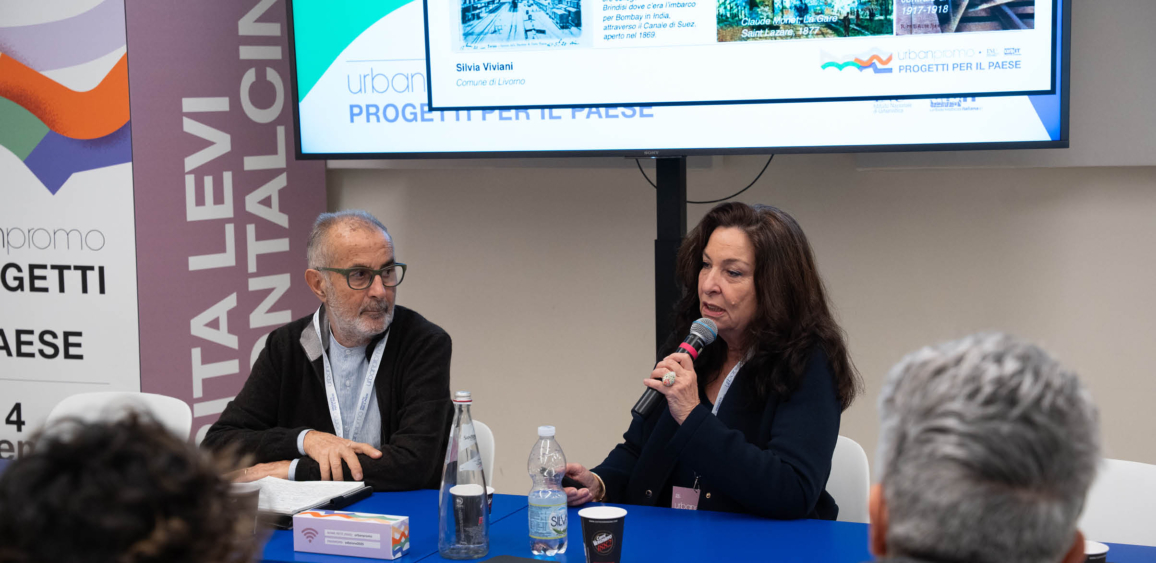
“Regenerate in Livorno: projects integrated into the urban quadrant of the station”
Silvia Viviani, Councilor for Urban Planning, Municipality of Livorno
“Redevelopment and reuse of areas and buildings no longer used by rail transport for tourist and systematic mobility: the Monte Ciocci – San Pietro cycle/pedestrian path in Rome”
Anna Donati, Rome Mobility Services
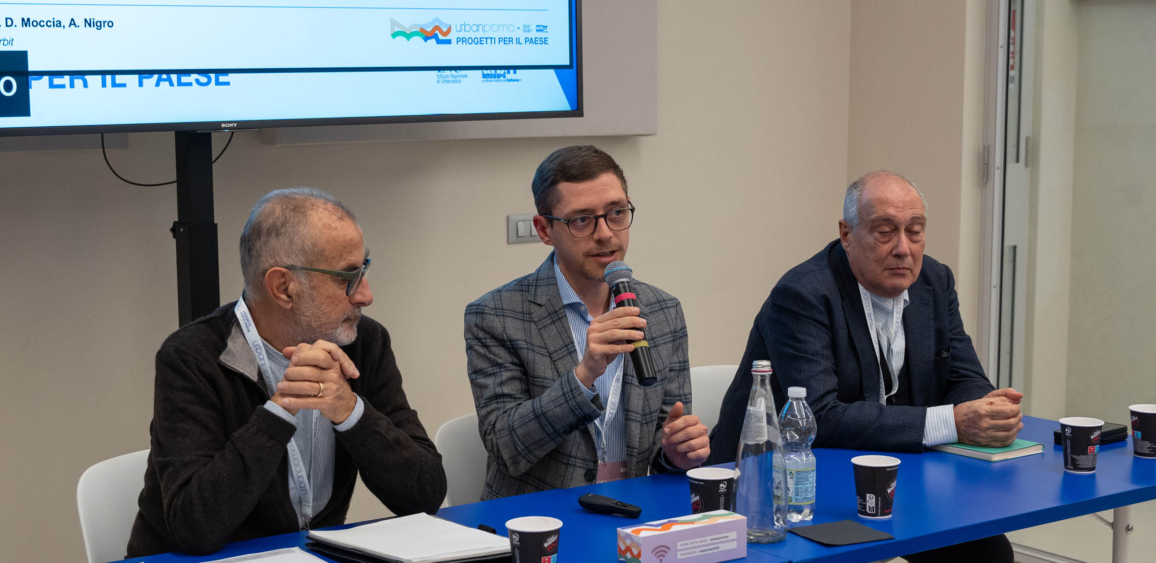
“The role of the station as a transport hub and service hub, the Campania case”
Francesco Domenico Moccia, INU
Conclusions
“Development perspectives of the theme of territorial vocations of stations, the Transit Oriented Development approach”
Luigi Contestabile, Italian Railway Network
13:30 Closing of the works
Italiano