A destination such as a university residence, in addition to fully reflecting contemporary plans and programs, allows for significant urban development in economic and social terms.
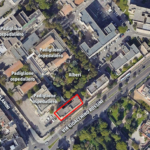
The study projects a synergy of intent between the transformation of the property in question and the redevelopment of the nearby former Galateo sanatorium in order to coordinate a combined action at the service of the community.
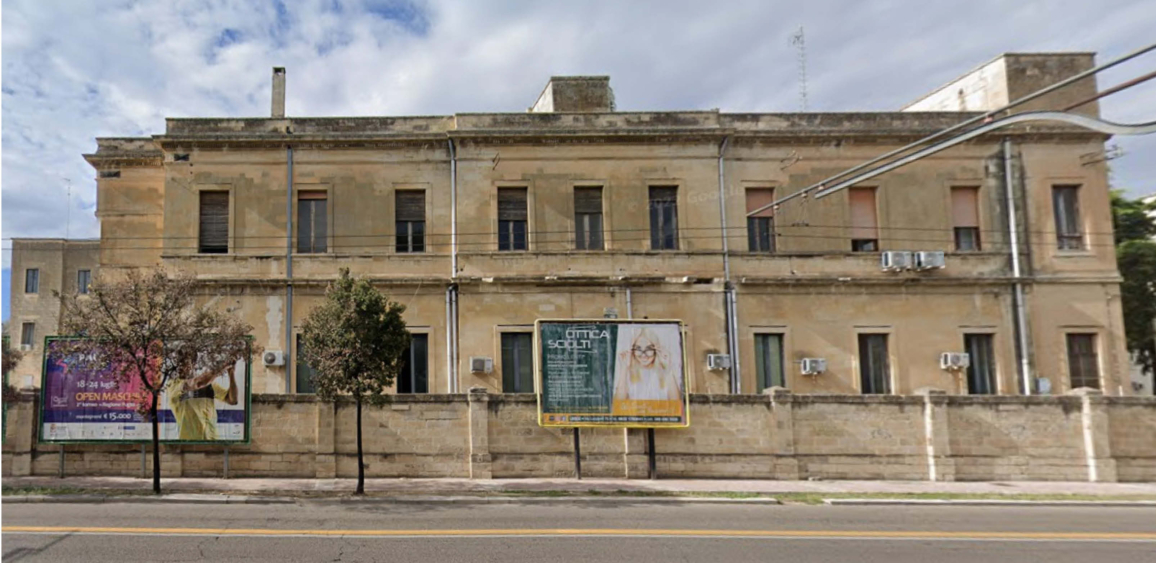
The pavilion has a “C” plan with two floors above ground and a basement and its Lecce stone envelope is regular in geometry and in the rhythm of solids and voids that frames the openings.
The study proposes minimal interior interventions capable of freeing the rooms from overfetations in order to maintain their original layout and identify spaces suitable for student residential use, both private and collective.
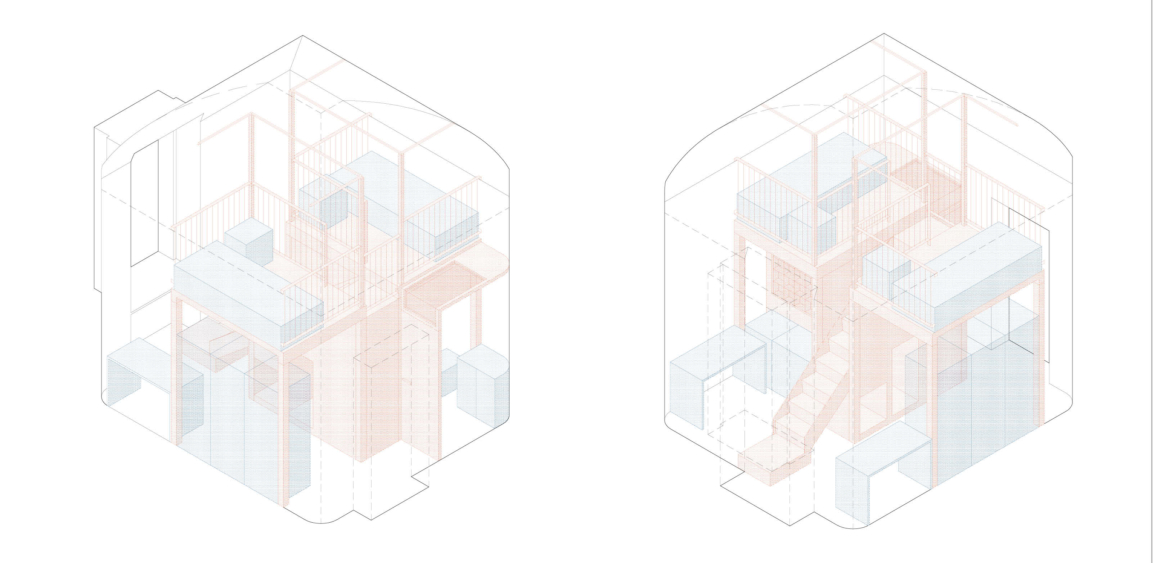
The two extremes accommodate common spaces while the original linear development inpatient rooms are converted into rooms for students: The proposal identifies a two-level accommodation model that allows for the housing of 34 accommodation spaces while preserving the original architectural conformation thanks to the inclusion of an autonomous structure capable of housing study space and sanitation in the lower part and sleeping space in the upper part. A solution that guarantees a private dimension suitable for the well-being of students and that respects the history of the pavilion.
Italiano