
Franco Alberti, INU Veneto
Maurizio Tomazzoni, INU Trentino
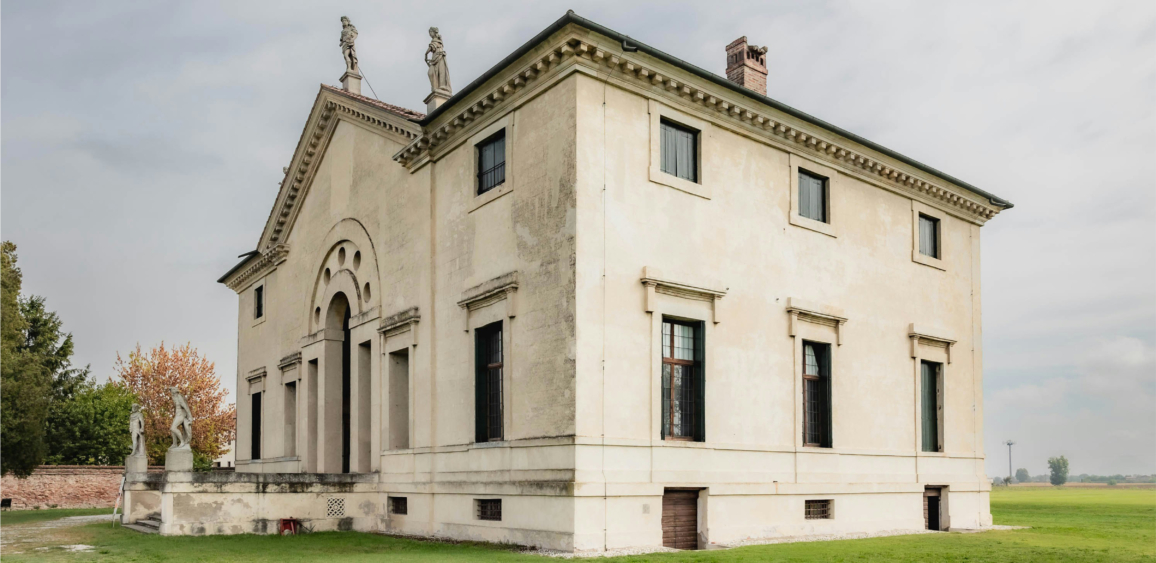
Villas, along with their surrounding components—such as cultivated lands, avenues, parks, and gardens—represent a unique landscape entity where shape and function achieve an elegant and eloquent synthesis. This approach has developed and matured over several centuries, establishing itself as an organizing element in territorial planning capable of achieving deep harmony with its surrounding context, effectively summarizing the connection and relationship between architecture and landscape.
The discussion proposed in this seminar, through the comparison of various regional experiences, is particularly timely—especially in relation to the policies and tools implemented by Italian regional authorities to enhance villas as a historical ecosystem that has shaped current spatial settlement patterns.
The widespread occurrence of the “Villa model” across various regions of Italy—such as the Medici Villas inscribed on the UNESCO World Heritage list alongside the Lucchesia villas in Tuscany, the Palladian Villas on the UNESCO list alongside the Venetian Villas in Veneto and Friuli Venezia Giulia, the Vesuvian Villas in Campania, the Tusculan Villas in Lazio, and the Lake Como villas in Lombardy—allows for a comprehensive analysis of the model’s prevalence and its significance within regional spatial and settlement planning, placing these historic buildings at the center of local social, cultural, and economic life.
Organized by the INU Veneto Regional Section, the seminar brings together various regional INU sections to compare local contexts, experiences, policies, and tools. By engaging scholars, administrators, and professionals, the event aims to foster a shared cross-regional reflection on the importance of historical legacies, their influence on spatial transformations, and, above all, future perspectives for their revitalization and enhancement within spatial development policies.
PROGRAMME
09:30 Opening
Introduction and moderation
Franco Alberti, INU Veneto
09:50 Introductory session
History, territory, landscape
Speakers
“The man-made landscape”
Maurizio Tomazzoni, INU Trentino
“The ‘villa system’ in shaping the cultural landscape”
Franco Alberti, INU Veneto
10:30 Part One
The perspective of INU Regional Branches: round table on planning and policies
Speakers
“Territorial, urban, and landscape aspects: perspectives on reuse and enhancement. Heritage assets in planning tools”
Pasquale De Toro, President of INU Campania
Alberto Romano Gentile, Executive Officer, Campania Region
Camilla Cerrini Ferroni, President of INU Tuscany
Franco Alberti, President of INU Veneto
11:30 Part Two
Conservation and enhancement: UNESCO World Heritage List
Speakers
“Medici villas and gardens in Tuscany”
Carlo Francini, Head of the “Florence World Heritage Site and UNESCO Relations” Office and Director of the Municipal Museums Superintendence Service
“Palladian Villas as World Heritage: UNESCO approaches to the protection, enhancement, and governance of territorial transformation”
Katia Basili, Architect, Senior Expert in the management and protection of UNESCO World Heritage sites
12:10 Part Three
Energy and landscape
Speakers
“The landscape settings of villas: key elements for protecting the cultural landscape”
Marta Mazza, Superintendent of Archaeology, Fine Arts and Landscape for the provinces of Padua, Treviso, and Belluno
“Cataloguing villas, their visual settings, and the agricultural landscape: criteria and methods”
Andrea Valentini, Head of the Technical Department, Regional Institute of Venetian Villas (IRVV)
12:50 Conclusions
Environmental sustainability of the villa model and future outlook
13:30 Closing of the proceedings
Italiano
Contributions